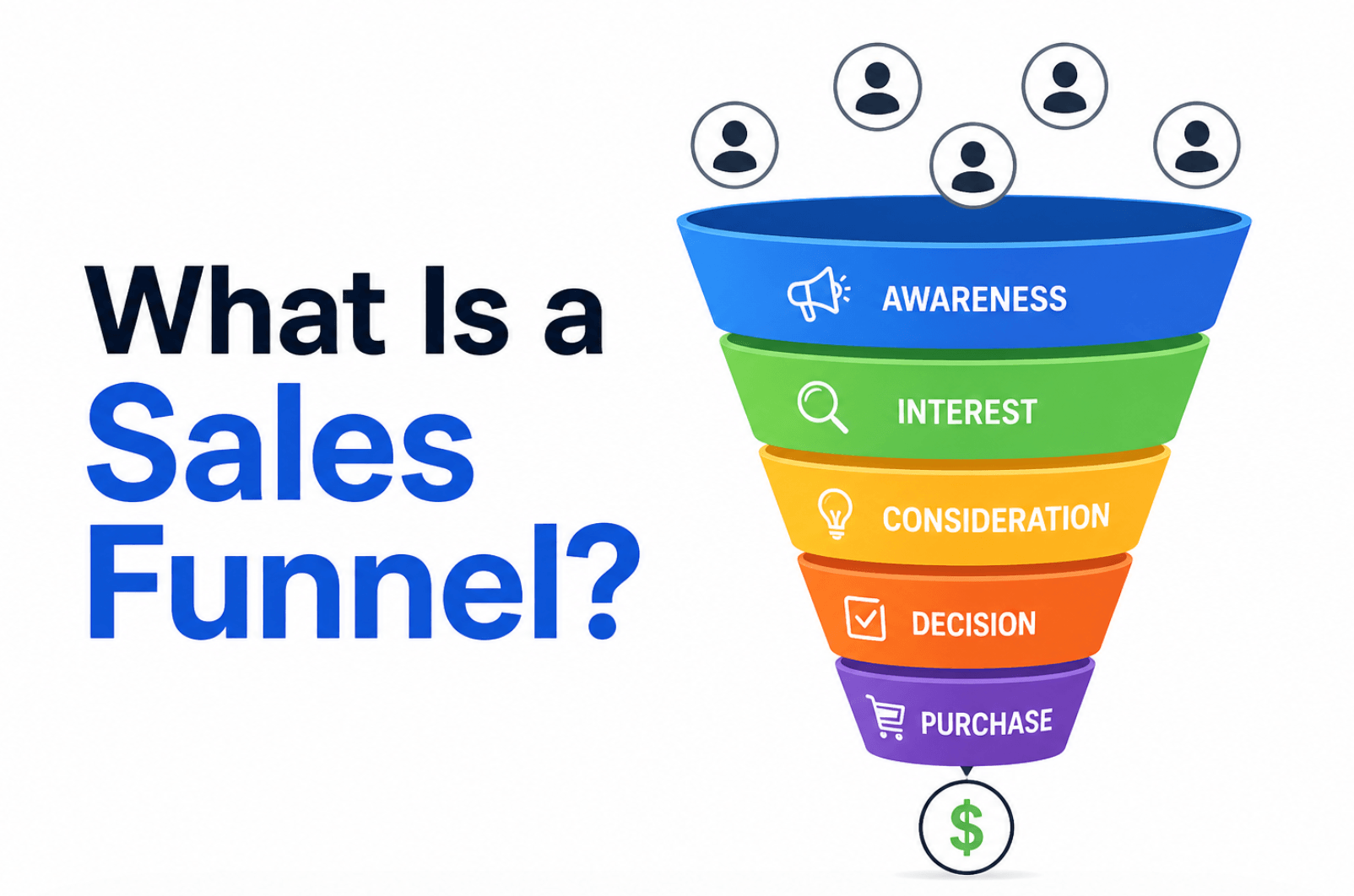
If you’ve spent any time in the world of online business, you’ve heard the term “sales funnel” thrown around constantly. Marketers talk about it like it’s some magic system that prints money on autopilot.
But what actually is a sales funnel, and do you really need one?
In this post, I’m going to break it down in plain English. No buzzwords. No fluff. Just a clear, practical explanation you can actually use.
What Is a Sales Funnel?
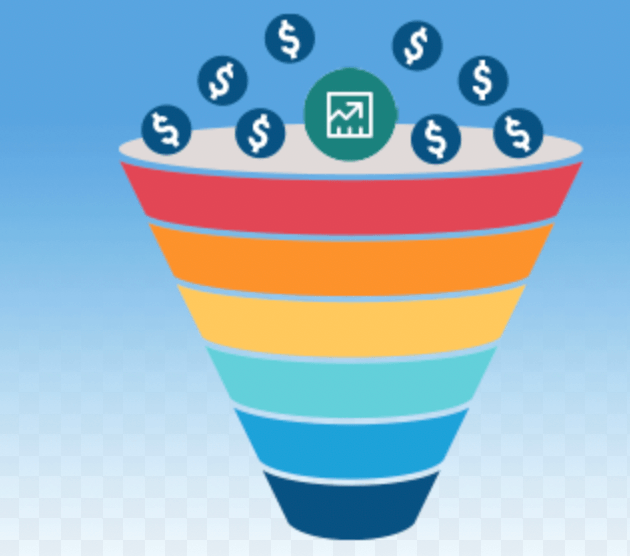
A sales funnel is the step-by-step journey a potential customer takes from first discovering you to eventually buying from you.
The word “funnel” is used because of the shape: at the top, you have a large, wide audience of people who might be interested in what you offer.
As they move through each stage, some drop off. By the time you reach the bottom of the funnel, you’re left with a smaller group of people who are ready and willing to buy.
Think of it like this: imagine 1,000 people stumble across your blog. Maybe 200 of them sign up for your email list.
Of those 200, perhaps 40 open your sales email. And of those 40, maybe 10 actually buy. That’s a funnel in action.
The 4 Main Stages of a Sales Funnel
Most sales funnels follow a four-stage framework, often referred to as AIDA.
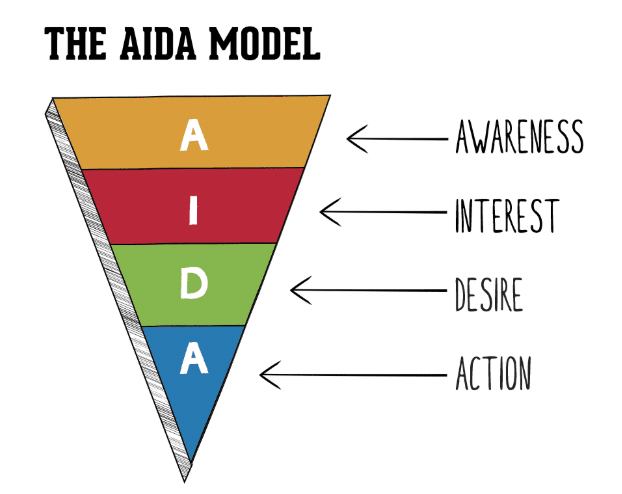
Awareness
This is the very top of the funnel. The prospect doesn’t know who you are yet. They might find you through a Google search, a social media post, a YouTube video, or a referral from a friend.
Your goal at this stage: get their attention.
Interest
Now they know you exist, and they’re curious. They’re reading your blog posts, watching your content, or browsing your website. They haven’t committed to anything yet, but they’re paying attention.
Your goal at this stage: keep them engaged and build trust.
Decision
The prospect is now seriously considering buying. They might be comparing options, reading reviews, or weighing the pros and cons of your offer versus a competitor’s.
Your goal at this stage: give them a compelling reason to choose you. This is where strong sales copy, testimonials, guarantees, and bonuses come into play.
Action
This is the bottom of the funnel, the moment of purchase. The prospect becomes a customer.
Your goal at this stage: make buying as easy and friction-free as possible.
Why Do Sales Funnels Matter?
Without a sales funnel, your sales process is chaotic and unpredictable. You might get the occasional purchase, but you have no system for consistently turning strangers into buyers.
A well-built funnel does several important things.
- Filters out unqualified leads so you’re only spending energy on people who are actually interested.
- Builds trust over time by delivering value before asking for a sale.
- Works on autopilot: once set up, a funnel runs 24/7 without you manually chasing every lead.
- Helps you scale: When you know your funnel converts, you can invest more in driving traffic and grow your revenue predictably.
For online business owners and content creators, especially, a sales funnel is the backbone of any sustainable income strategy.
A Simple Real-World Example
Let’s say you run a blog about personal finance for expats. Here’s what a basic sales funnel might look like:
Awareness
Someone searches “how to invest money abroad” and finds your blog post ranking on Google.
Interest
They read your post, find it helpful, and notice you’re offering a free checklist: “7 Steps to Building Wealth as an Expat.” They opt in with their email.
Decision
Over the next few days, they receive a welcome email sequence that delivers value, builds your credibility, and introduces your paid guide: “The Complete Expat Wealth Blueprint.”
Action
They click the link, land on your sales page, and purchase the guide on Gumroad.
That’s a complete funnel from cold stranger to paying customer, and most of it runs automatically once it’s set up.
The Key Components of a Sales Funnel
Building a funnel doesn’t have to be complicated. At its core, you need the following.
- Traffic source: How people find you (SEO, social media, paid ads, etc.)
- Lead magnet: A free, high-value resource offered in exchange for an email address
- Email sequence: A series of automated emails that nurture the relationship and lead to an offer
- Sales page: A dedicated page that clearly explains your offer and drives conversions
- Offer/product: The thing you’re actually selling (a digital guide, course, service, etc.)
- Thank-you/delivery page: Where the customer lands after buying, confirming the transaction
You don’t need all of these on day one. Many successful online sellers start with just a lead magnet, a simple email sequence, and a product. As you grow, you layer in complexity.
Common Mistakes People Make with Sales Funnels
Mistake #1: Skipping the nurture stage
Too many people go straight from “opt-in” to “buy my product.” If you haven’t built any trust first, most people won’t convert. Your email sequence exists to warm people up — use it.
Mistake #2: Sending traffic to a page that isn’t optimized
It doesn’t matter how much traffic you drive if your landing page or sales page isn’t convincing. Invest time in your copy.
Mistake #3: Giving up too early
Funnels take time to optimize. Most people don’t buy on the first touchpoint. Follow up, test, and tweak.
Mistake #4: Overcomplicating it
You don’t need expensive software or a 12-step funnel to get started. A simple opt-in form, a three-email sequence, and a Gumroad product page are enough to make your first sales.
Final Thoughts
A sales funnel isn’t some complicated, techie system reserved for big marketers with huge budgets. At its core, it’s just a structured way of guiding the right people toward a purchase by building awareness, earning trust, and making a clear offer.
If you’re building an online business of any kind, understanding your funnel is one of the highest-leverage things you can focus on.
Start simple. Build trust. Make the ask. Then optimize as you go.
Looking for more practical guides on building income streams and growing your digital business? Browse the sekihudson.com blog for no-fluff strategies on online business, content creation, and financial independence.