It was sometime in 2012. I was a regular university student, with lectures, deadlines, and late nights. But I had stumbled across something that would quietly change my life: online affiliate marketing.
I started going down rabbit holes online, reading about people making money from their laptops and earning commissions by promoting other people’s products. It sounded almost too good to be true. But one course stopped me in my tracks.
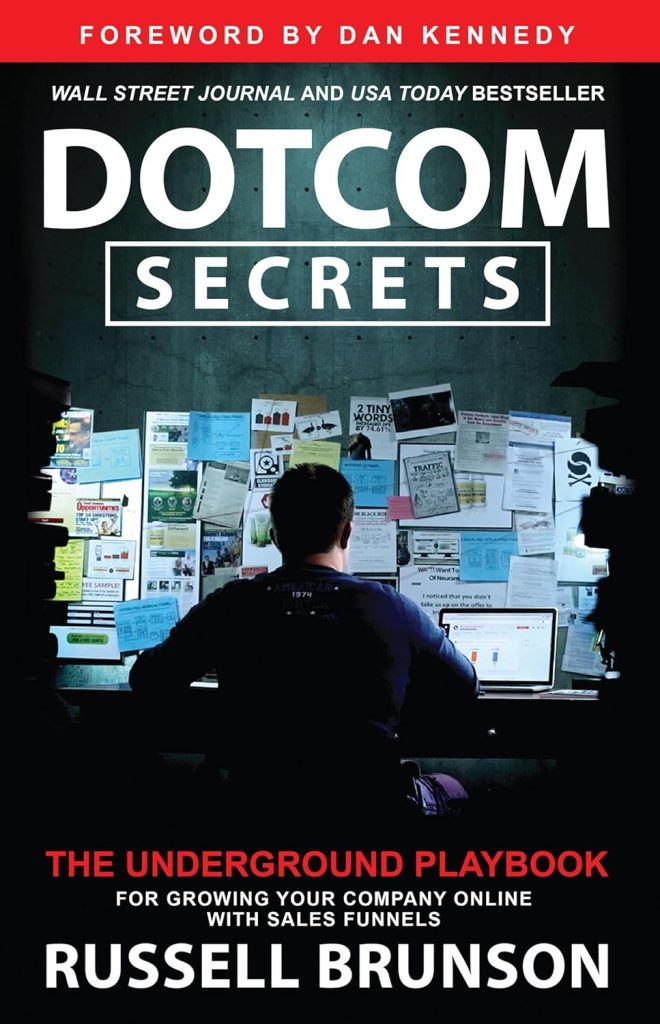
The Course That Started It All: DotCom Secrets by Russell Brunson
The course was called DotCom Secrets, created by Russell Brunson, the entrepreneur who would later go on to build ClickFunnels into a $100M+ company.
Back then, it wasn’t a published book. It was a beginner-focused online course designed to teach ordinary people how to make money on the internet.
The framework was simple, actionable, and crucially executable by a broke student with almost no budget. So I followed it, step by step.
Step 1: Choose a profitable niche
The first step in the DotCom Secrets framework was to choose a profitable niche. I kept it obvious: make money online.
It’s one of the most competitive niches in existence, but for a beginner, it made sense that the products were plentiful, the audience was hungry, and I already understood the subject because I was trying to do it myself.
Step 2: Find an affiliate product
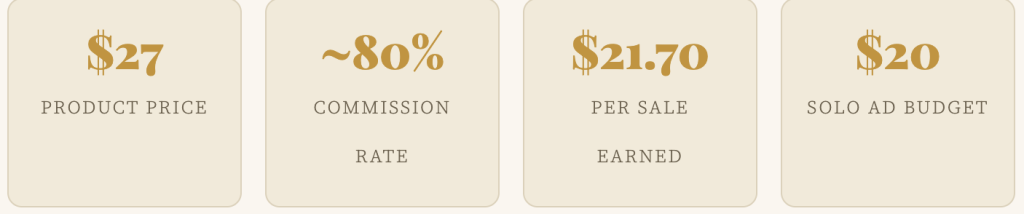
Next, I headed to ClickBank, the popular affiliate marketplace for digital products. I filtered by the make-money-online category and found a product selling for $27 with a jaw-dropping commission rate of around 80–90%.
That meant every sale would put approximately $21.70 in my pocket. I had never earned a dollar online at that point. That number felt enormous.
Step 3: Build a Squeeze Page Using the Self-Liquidating Offer Model
Here’s where the clever strategy came in. Russell taught a model called the Self-Liquidating Offer (SLO), and it’s still used by top marketers today.
The idea is simple:
How the Self-Liquidating Offer Works
- Find an affiliate product you want to promote
- Copy the headline/title from the product’s sales page
- Build a simple squeeze page using that same headline
- The only thing on the page? An opt-in field asking for an email address
- When someone opts in, redirect them directly to the affiliate offer
- If even one person buys, your ad spend is recovered (“liquidated”)
- The email subscribers? Pure profit-building assets.
Before ClickFunnels existed, Russell provided a basic page builder, something like a quiz page tool, to make this accessible to beginners.
I used it to build my squeeze page. No design skills required. No coding. Just a headline, an email field, and a button.
“You’re not just buying traffic. You’re building a list. The sale on day one pays the bill. The list pays you for years.”
Step 4: Drive Traffic with Solo Ads
With the page live, I needed traffic. The DotCom Secrets course recommended paid advertising, and for beginners in that era, the go-to option was solo ads.
Solo ads are a form of email advertising where you pay someone who already owns a large email list in your niche to send your offer to their subscribers.
Back then, a popular solo ad marketplace was run by a vendor named Daegan Smith (or a similar service of that era), who sold packages of clicks at affordable prices.
I bought a solo ad package for $20. That bought me approximately 100 clicks to my squeeze page.
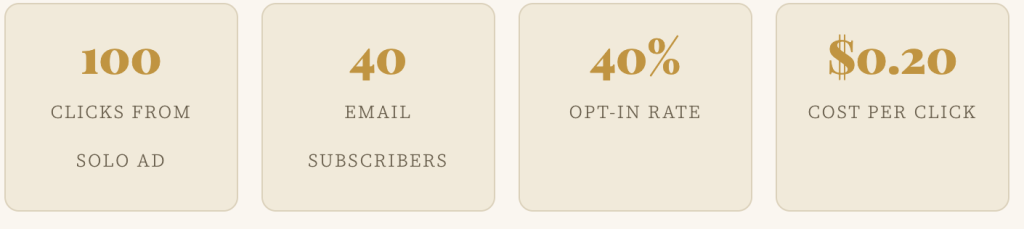
A 40% opt-in rate is actually quite strong. My squeeze page was working. 40 real people had given me their email addresses, interested in learning how to make money online, the same journey I was on.
But the redirect traffic? Nobody bought the $27 offer upfront. Days passed. I was frustrated. It felt like I had wasted my $20.
The 3 AM Email That Changed Everything
Three or four days after the campaign, I was sitting at my desk doing university homework. It was 3 in the morning. I was exhausted and, honestly, a little defeated. I had 40 subscribers sitting on my list and nothing to show for it financially.
On a whim or maybe out of desperation, I opened my email autoresponder and wrote a simple email to my 40 subscribers promoting the same ClickBank product I had set up as my offer.
I hit send.
And then, shortly after, I saw it: a commission notification for $21.70.
“I had spent $20 on the solo ad. I made back $21.70 from one email. Technically, I was in profit. But that’s not even the real story.”
Yes, $21.70 minus $20 ad spend equals a net profit of just $1.70. On the surface, that seems almost laughable.
But to me, in that moment, it wasn’t about the dollar amount. It was proof. Proof that the system worked. Proof that someone out there, a real stranger on the internet, had seen my message and chosen to buy.
That first sale online is the moment most marketers point to as their turning point. Not because of the money, but because of the belief it unlocks.
The Follow-Up Email: $362 from the Same 40 Subscribers
The story doesn’t end at $21.70.
A few days after that first sale, I sent another email to the same list of 40 subscribers. This time, I promoted a higher-ticket product, Russell Brunson’s own DotCom Secrets course itself, which he was selling at a higher price point.
The result? A commission of $362.

From a $20 investment, a list of 40 people, and two simple emails, the total return was over $383 in commissions and roughly $364 in profit. That’s an 18x return on ad spend, with a list that could keep generating revenue indefinitely.
What This Story Really Teaches About Affiliate Marketing
Looking back, the success of this campaign wasn’t luck. It was a well-designed system working exactly as intended. Here’s what made it work:
The List Is the Business
The $21.70 sale from the initial redirect traffic never came. But 40 people willingly gave their email addresses. Those 40 people were the real asset, and they more than paid for themselves over time.
The Self-Liquidating Offer Reduces Risk
The SLO model is genius in its design: your front-end affiliate offer is intended to recover your ad spend while simultaneously building your list for free. Even if no one buys on day one, you still have the list.
Follow-Up Emails Are Where the Real Money Lives
The first email made $21.70. The second email to the same list made $362. Email follow-up sequences are exponentially more valuable than cold traffic.
People need to see an offer multiple times before they buy, and the trust built through consistent email communication makes a huge difference.
High-Ticket Offers Are Game-Changers
The jump from a $27 offer to a higher-priced Russell Brunson course illustrates why smart affiliates always look for upsells and high-ticket back-end products. The same email list, the same effort, the same trust, but a dramatically larger commission.
Action Beats Perfection
This entire campaign was built by a student with no design skills, no technical expertise, and a $20 budget. The page was simple. The emails were simple. But it shipped, and that made all the difference.
How to Replicate This Strategy Today
The affiliate marketing landscape has evolved, but the core principles from this story remain as valid as ever. Here’s how you can apply the same framework today:
The 2026 Version of This $20 Strategy
- Pick a niche: Make money online, health & wellness, relationships, and personal finance are perennially strong.
- Find a ClickBank or Digistore24 product with 70%+ commission and strong social proof.
- Build a squeeze page using ClickFunnels, Systeme.io (free), or Leadpages mirror the product’s headline.
- Set up your autoresponder: GetResponse, AWeber, or ConvertKit all work well.
- Buy a solo ad on Udimi.com: a reputable marketplace with verified vendors in your niche.
- Write follow-up emails: 5–7 email sequences promoting the product from different angles.
- Add a high-ticket back-end offer to maximize the value of each subscriber.
Final Thoughts: Why That $21.70 Was Worth More Than $21.70
The dollar amount of a first online sale is almost irrelevant. What matters is what it represents: proof of concept. Proof that real strangers on the internet will exchange money for value delivered through a screen.
That $21.70 commission earned at 3 in the morning between homework assignments was the crack in the wall.
It showed that the system was real, that the effort was justified, and that bigger results were simply a matter of scaling what was already working.
The $362 sale that followed proved it.
If you’re trying to make your first sale online, stop waiting for the perfect strategy, the perfect niche, or the perfect product. Pick something.
Build something simple. Send traffic. Follow up. The sale will come. And when it does, don’t be surprised if it shows up at 3 in the morning.
“Your first sale online isn’t really about the money. It’s about the belief that comes with it the unshakeable knowledge that it is possible and that you can do it.”
Key Takeaways
- Choose a beginner-friendly niche: make money online
- Found a $27 ClickBank product paying ~80% commission (~$21.70/sale)
- Built a simple squeeze page using the self-liquidating offer model
- Bought a $20 solo ad → got 100 clicks → 40 email subscribers
- Sent one email at 3 AM → made first sale of $21.70
- Followed up days later → made a $362 high-ticket sale