You built the landing page. You set up the lead magnet. People are joining your list.
And then… nothing. Crickets. They sign up and forget you exist.
This is one of the most common problems in online business, and it’s exactly what lead nurturing is designed to solve.
In this guide, you’ll learn what lead nurturing actually is, why it’s the missing link in most beginner marketing strategies, and how to implement it even if you’re starting with a small list and zero budget.
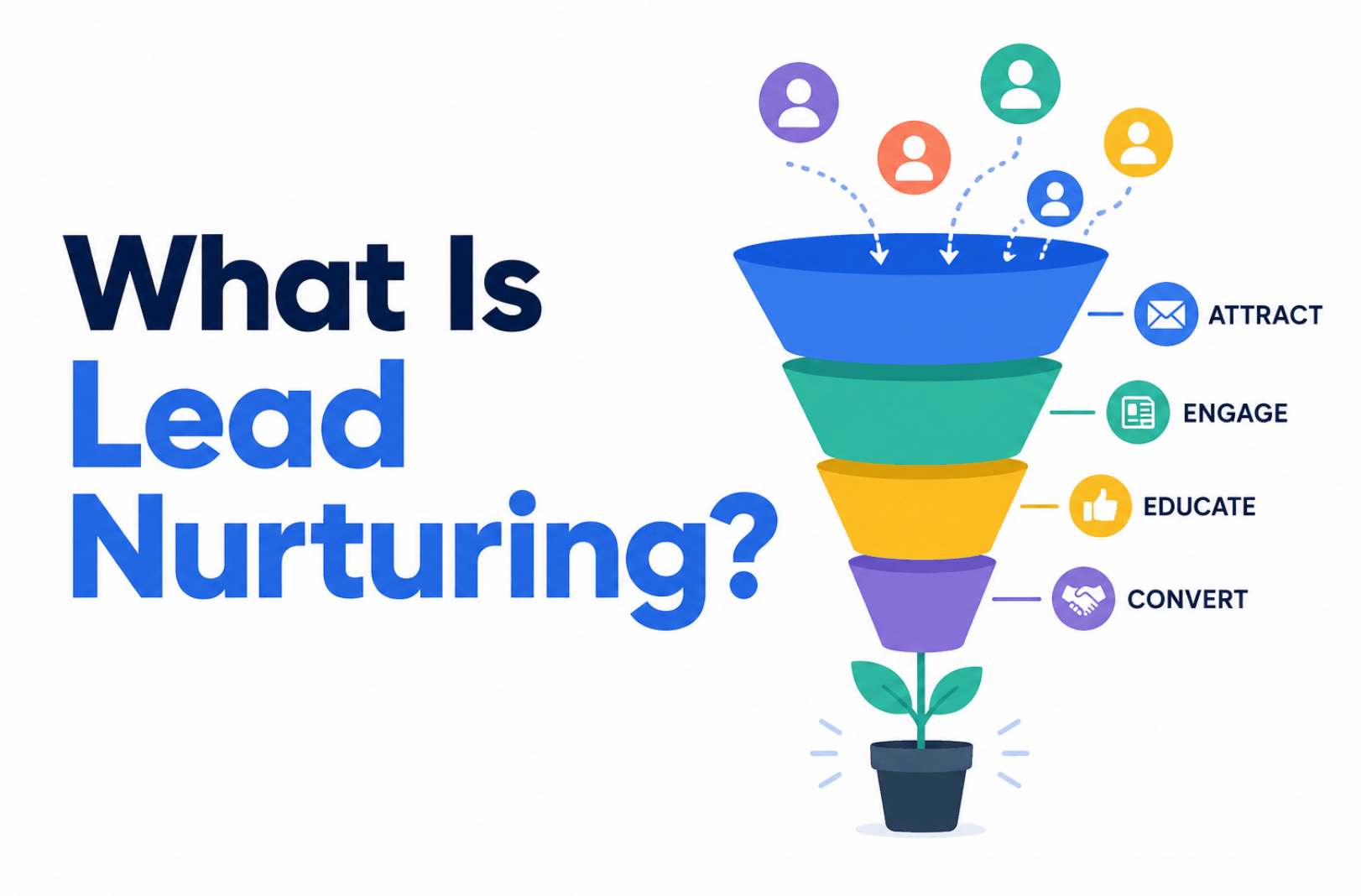
What Is Lead Nurturing?
Lead nurturing is the process of building a relationship with your subscribers over time by delivering consistent, relevant, and valuable content so that when they’re ready to buy, you’re the obvious choice.
The word “nurture” is intentional. Think of it like a garden. You don’t plant a seed on Monday and expect fruit on Tuesday. You water it, give it sunlight, and wait. Leads work the same way.
Most people who join your email list are not ready to buy right now. Research from Marketo has shown that roughly 50% of leads in any given system are not yet ready to purchase.
That doesn’t mean they won’t buy; it means they need more time, more trust, and more information before they’re ready to pull out their wallet.
Lead nurturing is how you stay present and useful during that waiting period.
Why Lead Nurturing Matters for Online Business Builders
If you’re building an online business, whether through affiliate marketing, digital products, consulting, or a niche blog, you’re in the trust business.
People don’t buy from strangers. They buy from people (or brands) they know, like, and trust. That’s not a cliché. It’s the entire foundation of why email marketing still outperforms social media for conversions.
Here’s what happens when you skip lead nurturing
- Subscribers go cold and forget who you are
- Your open rates drop because you’ve become irrelevant
- When you finally send a promotional email, it feels out of nowhere, and people unsubscribe
- You leave money on the table because you gave up on leads too early
Here’s what happens when you do lead nurturing right
- Subscribers look forward to your emails
- They recognize your name in their inbox
- They click your affiliate links because they trust your recommendations
- They buy your digital products because you’ve already demonstrated value
The difference isn’t luck or list size. It’s the system.
The Lead Nurturing Funnel Explained
To understand where lead nurturing fits, picture a simple funnel:
1. Awareness: Someone finds your blog post, social media profile, or ad.
2. Interest: They opt in to your email list in exchange for a lead magnet (a free checklist, guide, mini-course, etc.).
3. Nurturing: This is where most beginners drop the ball. Instead of continuing the conversation, they go silent or only email when they have something to sell.
4. Decision: The lead is warm, trusts you, and is actively considering a purchase.
5. Action: They buy.
Lead nurturing lives in stage 3. It’s the bridge between “I just signed up” and “I’m ready to buy.” Without that bridge, most leads fall off the funnel before they ever reach the decision stage.
The 5 Core Lead Nurturing Strategies
The Welcome Email Sequence
The first email your subscriber receives sets the tone for everything that follows. A great welcome sequence does four things.
- Delivers the lead magnet they signed up for
- Introduces you and your story in a way that builds connection
- Sets expectations for what kind of content they’ll receive
- Plant the first seed for your core offer
A solid welcome sequence is 3–7 emails sent over 7–14 days. This is your highest-engagement window; open rates are highest right after signup. Use it well.
Educational Email Content
Before you sell anything, teach something. Share what you know. Answer the questions your audience is already asking.
If your niche is helping beginners make money online, your nurture emails might cover topics like:
- How to choose a niche
- The difference between affiliate marketing and selling your own products
- How to set up an email list from scratch
- The tools you actually use and why
This kind of content positions you as a trusted guide, not just another person trying to sell them something.
Personal Storytelling
People connect with people, not with brands. One of the most underused lead nurturing tools is your own story.
Share why you started your online business. Share the mistakes you made early on. Share a win you had last month. This kind of transparency creates emotional connection, and emotional connection creates buyers.
Your story is a competitive advantage that no one else can copy.
Segmentation and Personalization
Not every lead is the same. A subscriber who clicked your affiliate link three times is very different from someone who hasn’t opened your last five emails.
Modern email platforms like MailerLite and Kit (formerly ConvertKit) allow you to tag and segment subscribers based on their behavior. This lets you:
- Send re-engagement campaigns to cold subscribers
- Trigger specific sequences based on links clicked
- Deliver more relevant offers to warmer leads
Even basic segmentation, separating active subscribers from inactive ones, can dramatically improve your results.
Consistent, Value-First Broadcasting
Beyond automated sequences, send regular broadcast emails on a consistent schedule. Weekly is ideal for most solopreneurs.
The rule is simple: give value before you ask for anything. For every promotional email, you should have sent at least two to three value-driven emails first.
This keeps your list warm, your open rates healthy, and your audience primed to respond when you do have an offer.
How Long Should Lead Nurturing Take?
There’s no single right answer. It depends on your niche, your audience, and the price of your offer.
As a general guide
- Low-ticket offers ($7–$47): 7–14 days of nurturing may be enough
- Mid-ticket offers ($97–$297): 3–6 weeks of relationship-building before a strong pitch
- High-ticket offers ($500+): Ongoing nurturing, often weeks or months, sometimes with a call or application step
The key insight is this: the higher the price, the more trust you need to build first.
Common Lead Nurturing Mistakes to Avoid
Emailing only when you have something to sell
Your subscribers will train themselves to ignore you because every email feels like a pitch.
Being too formal or robotic
Write like a human being. Write like you’re emailing a friend who asked you a question.
Giving up too early
Many business owners stop nurturing a lead after 2–3 emails. Research consistently shows it takes multiple touchpoints before a purchase decision is made. Stay in the game.
Not having a clear next step
Every email should have one clear call to action: read this post, watch this video, reply with your answer, or click this link. Don’t leave your reader wondering what to do next.
Ignoring your existing subscribers to chase new ones
Growing your list matters, but neglecting the people already on it is like trying to fill a leaky bucket. Nurture what you have.
Lead Nurturing Tools for Beginners
You don’t need an expensive tech stack to nurture leads effectively. Here are tools that work well at every stage.
Email marketing platforms.
- MailerLite: Excellent free plan, intuitive automation builder, great for beginners
- Kit (formerly ConvertKit): Built for content creators, powerful tagging and segmentation
Content creation:
- Your blog (long-form trust-building content your subscribers can reference)
- A consistent email newsletter
- Optional: a YouTube channel or podcast if you prefer audio/video content
CRM and segmentation
Both MailerLite and Kit have basic segmentation built in; you don’t need a separate CRM to start
Start simple. One email sequence, one consistent newsletter, one valuable lead magnet. You can build complexity as your list and revenue grow.
Lead Nurturing vs. Lead Generation: What’s the Difference?
These two terms often get confused, so let’s clear it up:
Lead generation is the act of attracting new subscribers through blog content, paid ads, social media, or partnerships. It’s about filling the top of your funnel.
Lead nurturing is what happens after someone enters your funnel. It’s about keeping them engaged, building trust, and guiding them toward a purchase decision.
Both matter. But most beginners spend all their energy on lead generation and almost none on nurturing, which is why their email lists feel “dead” even when they’re growing.
The most profitable online businesses do both in equal measure.
Wrapping Up: The Mindset Shift That Changes Everything
The biggest shift in understanding lead nurturing isn’t tactical; it’s philosophical.
Stop thinking of your email list as a group of transactions waiting to happen. Start thinking of it as a community of people who trusted you enough to give you access to their inbox. That’s a privilege, and it’s one worth honoring.
When you approach your list with genuine generosity, consistently sharing what you know, helping them solve real problems, and only promoting things you actually believe in, the sales follow naturally.
Lead nurturing isn’t a manipulation tactic. It’s just good relationship-building, applied to business.
Start there, and the rest gets a lot easier.
Ready to build your lead nurturing system? Check out the Start Here page for a step-by-step roadmap to building your first email funnel, even if you’re starting from scratch.