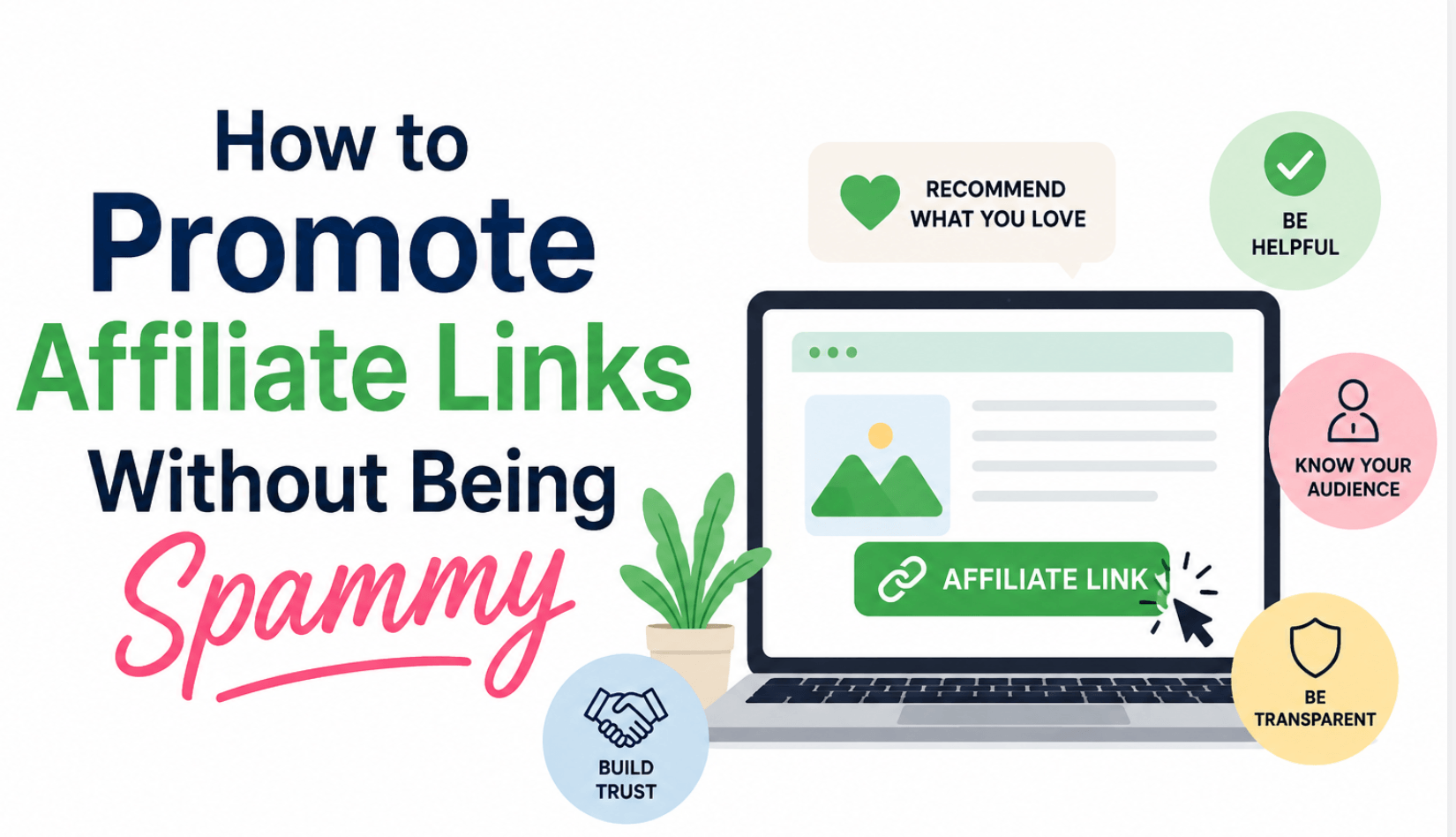
If you’ve been in the affiliate marketing space for more than five minutes, you’ve seen the relentless “BUY THIS NOW” posts, the comment sections flooded with bare links, and the email sequences that read like a used car salesman having a bad day.
And here’s the painful irony: that approach doesn’t just annoy people. It kills conversions.
After spending years as an engineer before building my own online income streams here in Mexico, I’ve learned that the best-performing affiliate content doesn’t feel like promotion at all. It feels like advice from someone you trust. This article breaks down exactly how to get there.
Why Spammy Affiliate Promotion Backfires
Before we get into tactics, it’s worth understanding why spammy promotion fails because once you understand the mechanism, the solution becomes obvious.
When someone feels sold to, their guard goes up. That’s a psychological reflex, not a character flaw.
The moment your audience senses your primary motivation is commission rather than helping them, they disengage. Worse, they stop trusting you entirely.
Spammy affiliate tactics also hurt you technically. Search engines are increasingly good at identifying thin, promotional content with little genuine value.
Social platforms suppress or penalize accounts that repeatedly post bare links. Email providers send campaigns straight to spam when engagement rates tank.
The result: you burn your audience and your traffic simultaneously.
Lead With Value, Every Single Time
The golden rule of non-spammy affiliate marketing is that the value must come before and outweigh the promotion.
This means your blog posts should genuinely solve a problem. Your emails should teach something useful.
Your social posts should entertain or inform. The affiliate link is a natural extension of that value, not its point.
A practical way to test yourself: if you removed every affiliate link from your content, would it still be worth reading? If the answer is yes, you’re on the right track.
For example, instead of writing “Here’s my affiliate link for [tool],” write a full breakdown of how you personally use that tool, what problem it solves, what its limitations are, and who it’s best suited for. Then include the link at the end. That post earns the click.
Use the Traffic → Email → Offer Funnel
One of the most effective frameworks I use across my own blogs is what I call the Traffic → Email → Offer funnel. Instead of blasting affiliate links at cold traffic, you warm people up first.
Here’s how it works
Traffic
A blog post or social content brings someone in by answering a real question they had.
You offer them something genuinely useful (a checklist, a guide, a mini-course) in exchange for their email address.
Offer
Over your welcome sequence, you build familiarity and trust before introducing affiliate recommendations.
By the time someone sees your affiliate offer inside an email sequence, they’ve already gotten value from you at least twice.
They’re not strangers. They’re a subscriber who’s seen you show up and deliver. That’s a completely different conversion environment than a cold audience.
This approach also protects your organic content from looking overtly promotional, which helps with both SEO rankings and reader trust.
Write Honest, Experience-Based Reviews
Product reviews are one of the highest-converting formats in affiliate marketing, but only if they’re real.
Google’s helpful content guidelines explicitly reward content written from first-hand experience. A review that mentions a product’s specific weaknesses, the learning curve you personally experienced, or the one feature you wish it had is infinitely more credible (and rankable) than a puff piece.
Here’s a simple structure that works.
- What the product is (briefly, don’t pad)
- Who it’s best for
- What you specifically used it for
- What worked well
- What could be better
- Your verdict and who should skip it
- Your affiliate link with a clear, honest CTA
That last point matters. A CTA like “Check the current price here” or “See if it’s right for your situation” converts better than “BUY NOW” because it doesn’t feel like pressure. It positions you as a guide, not a salesperson.
Contextual Linking Inside Useful Content
Contextual affiliate links are placed naturally inside content that’s already helping the reader, outperforming banner ads and isolated link drops by a significant margin.
The key is relevance. The affiliate link should appear at the exact moment the reader is thinking about the problem that the product solves.
If you’re writing a tutorial about setting up a home office and you mention the software you use to manage tasks, that’s the right moment to link.
The reader is mentally engaged with the topic, your recommendation feels organic, and the transition to the product makes logical sense.
Contrast that with dropping a link at the end of an unrelated post with “By the way, check out this tool I love.” The context is missing, the relevance is weak, and the click-through rate will reflect that.
Be Transparent About Affiliate Relationships
This one is non-negotiable both legally and ethically.
In most countries (including the US, where the FTC sets the standard most affiliates follow), you’re required to disclose when links in your content are affiliate links. Beyond the legal requirement, transparency actually builds trust rather than eroding it.
A simple, honest disclosure at the top of your post, something like “This article contains affiliate links. If you buy through them, I earn a small commission at no extra cost to you.” This does something counterintuitive: it makes readers trust your recommendations more, not less.
It signals that you’re upfront about how you earn, and that positions your content as honest rather than hidden.
Never hide affiliate links behind deceptive anchor text or bury the disclosure where no one will see it. Your long-term reputation is worth more than any single commission.
Tailor Recommendations to Your Specific Audience
Generic affiliate promotion recommending the same products to everyone, regardless of context, is a form of laziness that your audience can sense.
The most effective affiliate marketers know their readers so specifically that their recommendations feel personally relevant.
If your blog attracts beginners learning affiliate marketing from scratch, you don’t recommend enterprise-tier tools with steep learning curves.
If your audience is location-independent professionals, you don’t promote products that only ship domestically.
Think about the exact person reading your content. What are they trying to accomplish right now? What stage of the journey are they at? What objections do they have? The affiliate product you recommend should be the clearest answer to those specific questions.
When readers feel like a recommendation was made for them, not just at them, conversion rates climb, and refund rates drop.
Avoid These Common Spammy Behaviors
Here’s a quick reference list of what to stop doing if you’re currently doing it.
- Dropping bare links in Facebook groups or Reddit threads without context or a genuine contribution to the conversation.
- Over-emailing your list with back-to-back promotional sequences without value in between.
- Stuffing multiple affiliate links into every paragraph reads as desperation.
- Using deceptive subject lines to trick people into opening promotional emails.
- Recommending products you haven’t used, audiences and algorithms both notice.
- Relying on pop-ups alone without building a content foundation.
Each of these tactics might produce a short-term click. None of them builds the kind of trust that generates consistent, compounding income.
Build a Content Ecosystem, Not Just Individual Posts
The affiliates who earn the most don’t treat each piece of content as a standalone promotion. They build ecosystems of interconnected content that address a topic from multiple angles and funnel readers naturally toward relevant offers.
For example, if you’re promoting an email marketing tool:
- Write a beginner’s guide to email list building (top of funnel)
- Write a comparison post of the top email tools (middle of funnel)
- Write a setup tutorial for the specific tool you recommend (bottom of funnel)
- Link all three posts to each other
A reader who enters through any one of those posts is being guided through a logical journey. By the time they hit the comparison or tutorial, they’re primed to make a decision, and your affiliate link is right there when they are.
This approach also gives you serious SEO topical authority, which helps all three posts rank better collectively than any one would alone.
Final Thoughts
Promoting affiliate links without being spammy isn’t about being timid or under-promoting. It’s about understanding that trust is the actual currency of affiliate marketing.
When you build content that genuinely helps people, funnel them into an email relationship before pitching, give honest and specific recommendations, and treat your affiliate links as a natural part of the value you offer, you stop being a promoter and start being an authority.
That’s a completely different game. And it’s a much more profitable one.